The DEC professional development and preparation has an ideal that encourages me to pursue the early childhood field. It says, " we shall continually be aware of issue challenging the field of early childhood special education and advocate for changes in laws, regulations, and policies leading to improved outcomes and services for young children with disabilities and their families." All children should be given a chance and as practitioners, we are their" social change," Professionally, I look forward to the challenges, and hope one day to show my support for the early childhood in the political arena.
Testing for Intelligence
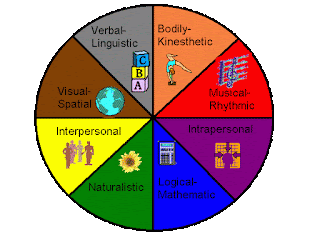
Testing for Intelligence First, I would like to ask the question why it is so important to find an effective way to measure children’s minds and abilities? Who wants to know, and why? What will the information be used for? Based on what Berger said in her book, that “learning to speak, read, and write the school language is pivotal for academic achievement, the foundation of all primary school education. Children differ widely in how well they use the school language. Some differences may be innate. However, most of the language gap between one child and another is the result of the social context, specifically of two factors: family income and adult expectations. Decades of research throughout the world have found a strong correlation between academic achievement and socioeconomic status” (Berger, 2012) . I mean can you honestly and fairly test for intelligence when there are factors involved, and given the opportunity, what if the variable of the environment that the child is ...
Larry you have been very inspiring. I have has great pleasure sharing this course with you as well as sharing your interesting blog. Well wishes in the future!!
ReplyDelete